

Political actors and analysts say it is premature to conclude that Uganda’s opposition is finished, arguing that despite current challenges, new political forces could still emerge and reshape the country’s political landscape.
They note that Uganda’s opposition has historically evolved through different phases and personalities, with moments of apparent decline often followed by the rise of new leaders and movements.
Uganda’s first presidential election under the current political dispensation was held in 1996, when President Museveni defeated opposition candidate Paul Kawanga Ssemogerere with about 74 percent of the vote, establishing a dominant lead over the opposition at the time.
In 2001, Dr Kizza Besigye emerged as the most formidable opposition challenger, contesting under the Forum for Democratic Change (FDC) banner.
Besigye would go on to challenge Museveni in multiple elections, becoming the central opposition figure for over a decade before stepping back from presidential races after the 2016 general election.
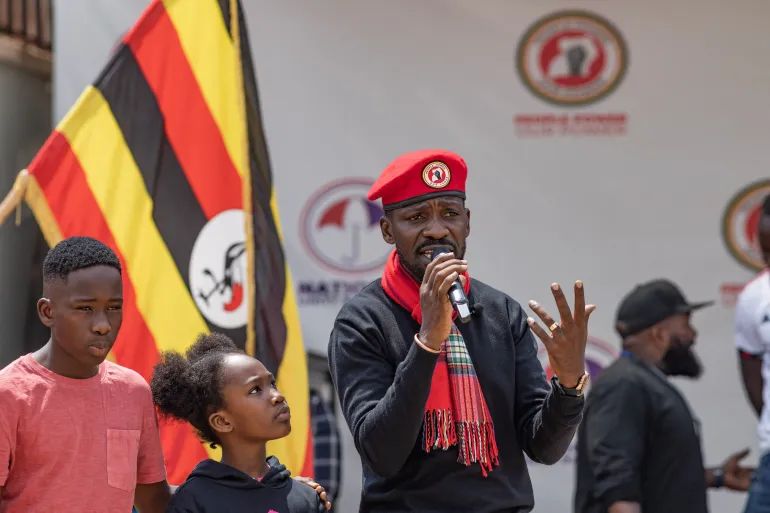
The opposition landscape shifted again in 2021, when musician-turned-politician Robert Kyagulanyi Ssentamu, also known as Bobi Wine, entered the presidential race under the National Unity Platform (NUP) ticket.
In that election, Museveni secured 58 percent of the vote—his lowest margin in recent elections—while Kyagulanyi garnered 35 percent. NUP also made significant gains in Parliament, winning 57 seats and emerging as the largest opposition party in the House.
However, recent electoral contests leading into the 2026 general elections have seen NUP and other opposition parties perform less strongly in some areas, raising questions among observers about whether the opposition is losing momentum or simply undergoing a transitional phase.
Political veteran and former Kawempe South MP Ssebuliba Mutumba says it would be misleading to conclude that the opposition is collapsing.
“It is never over for the opposition,” Mutumba said. “Political movements go through cycles. What may appear as weakness today can easily transform into renewed strength tomorrow.”
He added that Uganda’s political history shows opposition forces often reorganize after setbacks, sometimes emerging stronger.
Meanwhile, Kira Municipality MP Ibrahim Ssemujju Nganda notes that the political environment for opposition actors has changed significantly over the years, particularly regarding the space available for mobilisation.
“Government has increasingly restricted political activities,” Ssemujju said, adding that the current environment is more challenging than in previous years.
Both Mutumba and Ssemujju also acknowledge internal challenges affecting opposition effectiveness, including leadership disputes, competition for influence, and a tendency for movements to revolve around individuals rather than strong party institutions.
Political observer Prof. Rogers Barigayomwe says it is premature to write off the opposition altogether, arguing that underlying political grievances could still give rise to new actors.
“As long as the issues that drive citizens to demand change remain unresolved, it is difficult to assume that the opposition will disappear,” Barigayomwe said. “New leaders and movements can still emerge just as they have in the past.”
Analysts argue that the opposition must reorganize and strengthen internal cohesion to regain political momentum.
Rebuilding grassroots structures, avoiding internal conflicts, and developing stronger party institutions will be key to sustaining opposition politics in Uganda.
Ssemujju said his party has already embarked on nationwide mobilisation efforts to reconnect with supporters and re-energize citizens who may have lost hope in political change.
He has called on other opposition parties to undertake similar efforts, noting that broader political engagement will be critical for the opposition to remain a significant force in Uganda.
